US Tariffs Damaged Trade. Can AI Spending Repair It? - Deep Dive Incoming
When President Trump slapped those "Liberation Day" tariffs on everything back in April, the doomsayers were out in force. Economists predicted a global economic nosedive, with the U.S. buying less, exports tanking, and job losses piling up. Fast forward to December, and… well, the sky isn't falling. Some of those same economists are actually revising their growth predictions upward.
The reason? Apparently, what Trump took away with tariffs, the U.S. tech industry "gave back" with an AI spending spree. We’re talking about Amazon, Google, Meta, and Microsoft alone dropping close to $400 billion this year on capital expenditures, mostly for AI. The WTO even bumped up its 2025 global merchandise trade volume growth estimate to 2.4%, a significant jump from the 0.9% they predicted in August.
Sounds like a neat, feel-good story, right? Tariffs bad, AI good, America saves the day. But hold on a second. Anyone who’s spent five minutes staring at an Excel sheet knows that aggregate numbers can hide some pretty ugly truths.
AI's "Rising Tide": Lifting Only a Few Boats?
The Uneven Distribution of AI Riches The article makes it sound like AI is lifting all boats, but the reality is far more selective. Sure, the U.S. represents a quarter of the global economy, and AI investments accounted for as much as half of its GDP growth in the first half of 2025. But who *really* benefits? Beyond the U.S. and China (the two AI superpowers), the spending on tech infrastructure mainly helps a handful of regions already deep inside the AI supply chain. Taiwan, for example, the global hub for advanced AI chips, saw its GDP growth forecast jump to 7% this year, up from 4.4% earlier. That's according to IMA Asia, which runs executive forums. And get this: Taiwan’s capital expenditures on plants and equipment are expected to rise 30% this year. But here’s the kicker: even as AI spending inflates Taiwan’s economic numbers, consumer demand remains sluggish and other industries are struggling. It’s like injecting steroids into one muscle while the rest of the body atrophies. South Korea (memory chips) and the Netherlands (chip-making equipment) are also getting a boost. Oriano Lizza, a trader at CMC Markets, notes that Asia accounted for nearly two-thirds of global AI-related trade growth in the first half of 2025. "The benefits are overwhelmingly concentrated in advanced manufacturing economies," he said. So, is AI *saving* the global economy, or just shifting the wealth around? I'd argue it’s the latter. The gains are concentrated in very specific sectors and regions. It reminds me of the dot-com boom—a few companies made a killing, while everyone else was left holding the bag.Tariffs: A Delayed Impact, Not a Dodged Bullet
The Looming Tariff Cliff And let’s not forget about those tariffs. The article mentions that companies front-ran the tariffs, rushing to ship goods to the U.S. before the deadlines. This artificially inflated trade numbers this year. As Mansoor Mohi-uddin, chief economist at the Bank of Singapore, put it, “It’s too early to say that the tariffs have had less impact than feared. What’s happening is that the impact has just been delayed.” Now that the tariffs have kicked in and the front-loaded inventory is dwindling, economists expect companies to pass those costs onto consumers and export less to the U.S. The WTO seems to agree, reducing its 2026 forecast for world merchandise trade volume growth to 0.5%, a significant drop from the 1.8% it estimated back in August. The article then pivots to a "government backstop," mentioning the "One Big Beautiful Bill Act" (extending tax cuts and increasing the deficit), Germany's shift toward spending, and Japan's $135 billion stimulus package. The idea is that these policies, combined with a weak dollar and potential Fed rate cuts, might keep the global economy afloat in 2026, *if* the AI boom doesn't fizzle out. But here's the part I find genuinely puzzling. Why are we relying on *more* government spending to offset the negative effects of tariffs? It's like trying to put out a fire with gasoline. It’s a short-term fix that creates long-term problems. The increased deficit will eventually have to be paid for, either through higher taxes or reduced government services. And relying on a weak dollar to boost exports is a race to the bottom. A Sugar Rush, Not a Sustainable Solution The narrative that AI is single-handedly saving the global economy from Trump's tariffs is, at best, incomplete. It's more like a sugar rush than a sustainable solution. The benefits are narrowly distributed, the tariff pain is merely delayed, and the proposed solutions involve kicking the can down the road with more debt and currency manipulation. Anyone who thinks this is a recipe for long-term economic stability is deluding themselves. Smoke and Mirrors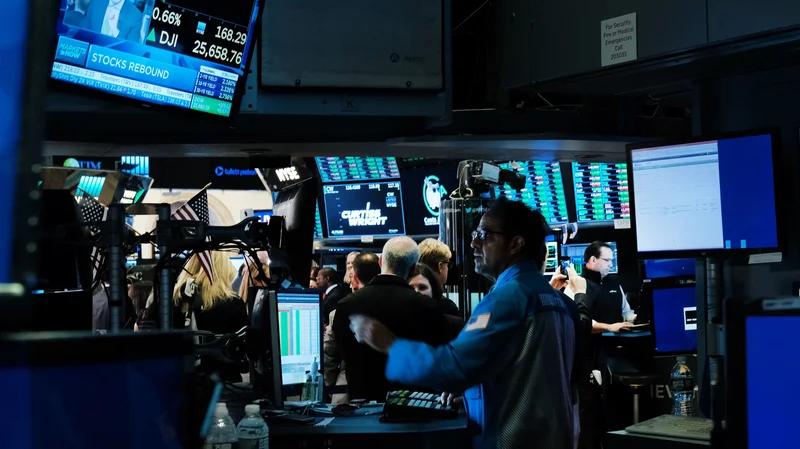
Related Articles
AI's 'Rescue': The Truth About America's Tariff Mess. - Redditors React
Alright, let's get one thing straight right off the bat: Microsoft's numbers are… well, they're big....